

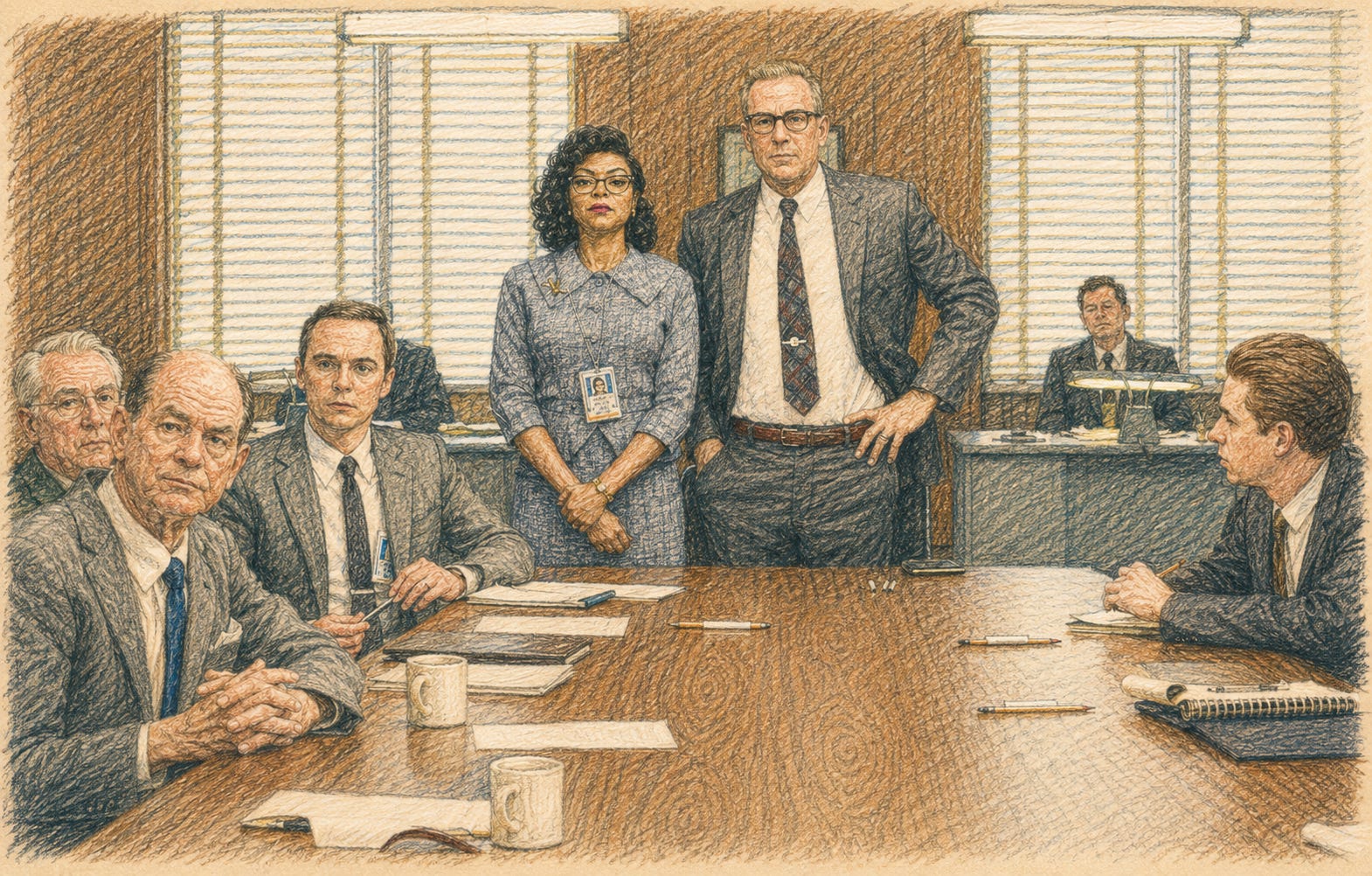
Every organization eventually starts looking for a “strong leader.”
A stronger Head of Product. A stronger Operations Director. A stronger Engineering Manager. Sometimes even a stronger CEO. The assumption is almost always the same: somewhere out there is a person whose leadership is an intrinsic quality, like intelligence or height. Bring that person into the company, and performance will improve almost automatically. If things later go wrong, the explanation is equally simple: we hired the wrong person.
It is an attractive belief because it turns a complex organizational problem into a recruitment problem. Finding the right leader feels much easier than changing an organization. It also creates compelling business stories. We love reading that someone “transformed the company” or “rebuilt the culture.” We rarely hear the less glamorous version: the company happened to reach the right stage of growth, the market shifted in its favor, the team around the leader complemented their weaknesses, and the organization was finally ready for changes that had previously failed. The second explanation is usually much closer to reality. It is simply much harder to fit into a headline.
Interestingly, management science has spent nearly a century trying to identify the characteristics of universally effective leaders. Researchers searched for the perfect combination of intelligence, confidence, charisma, determination, and dozens of other traits. The result was surprisingly disappointing. There are qualities that certainly help someone become a leader, but no combination consistently predicts success across different organizations, teams, and situations. Over time, researchers from organizational psychology, leadership studies, and business management all arrived at a remarkably similar conclusion: leadership effectiveness is not a property of a person. It is a property of the relationship between a person and their environment.
Once you start looking through that lens, many familiar business stories suddenly make much more sense. A Head of Product who built an outstanding startup may struggle inside a heavily regulated enterprise. An operations leader praised for introducing discipline into a global corporation may become a serious obstacle in a young company that survives through speed and experimentation. A manager who earns promotion by personally solving every difficult problem often becomes the bottleneck once the organization grows to a size where delegation matters more than individual heroics. The person did not necessarily change. The context did.
This is why I have become increasingly skeptical whenever someone tells me they are looking for a “strong leader.” My first question is always: strong for what? Strong for building something new, or for making an existing organization more predictable? Strong for rapid growth, or for operational excellence? Strong for leading experts who value autonomy, or for stabilizing a fragmented organization that needs structure? Without understanding the context, the word “strong” tells us remarkably little.
There is, however, one place where I think many academic models stop a little too early. They often describe leadership as finding the right match between a person and a situation. In reality, organizations never stop changing. Markets evolve. Teams grow. Products mature. Technologies reshape entire industries. A leader who is perfectly suited to today’s challenges may become tomorrow’s constraint. The real question, therefore, is not whether someone fits the current context, but whether they can evolve as quickly as the context itself.
Perhaps that is the rarest leadership capability of all: not charisma, not confidence, not decisiveness. The ability to recognize that the game has changed before everyone else does, and to change yourself before the organization starts looking for someone else.
Maybe that is why I no longer believe in strong leaders as permanent categories. I believe in strong matches between people and situations. Some of those matches last for years. Others last for only a single stage in an organization’s life. The best leaders are not those who remain unchanged while the world moves around them. They are the ones who keep becoming the right leader for the next chapter.